
Introduction: Why Warehouse Layout Matters
In many small and medium-sized businesses, warehouse layout is often designed based on available space rather than operational efficiency. Over time, this leads to congestion, excessive movement, dispatch delays, and increased labour costs. A poorly planned layout not only reduces productivity but also increases the risk of errors and material damage.
Warehouse layout planning is not just about arranging racks—it is about creating a structured system that ensures smooth material flow, minimizes handling, and improves overall efficiency. A well-designed layout can significantly reduce operating costs while enhancing service performance.
Understanding Material Flow in Warehouse
The foundation of an efficient warehouse layout is proper material flow. Every warehouse should follow a clear and logical movement path from receiving to storage and then to dispatch.
When material flow is not defined, items are handled multiple times, leading to delays, increased chances of material damage, and operational inefficiencies. By mapping the movement of materials step-by-step, businesses can eliminate unnecessary handling and reduce processing time.
An optimized material flow ensures that goods move in a structured direction without backtracking, improving both speed and accuracy.
Defining Warehouse Zones for Better Organization
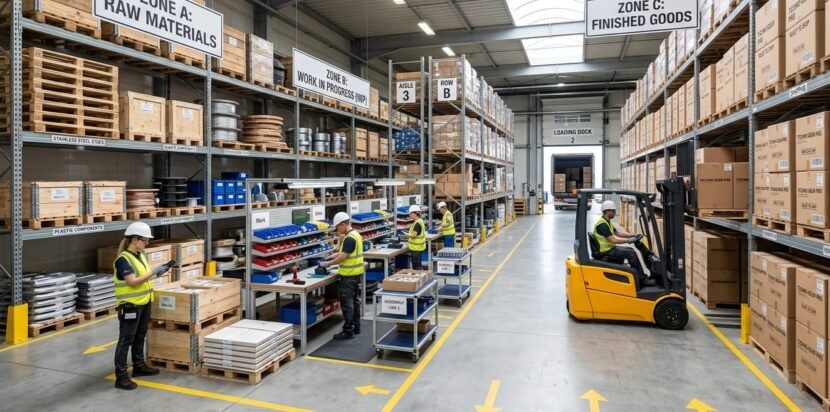
A well-organized warehouse should be divided into clearly defined zones such as raw materials, work-in-progress, finished goods, dispatch, and rejection or return areas.
Without proper zoning, materials often get mixed, creating confusion and increasing the chances of errors. Clear segregation allows employees to quickly locate items and ensures smooth workflow across operations.
Using visual management techniques such as labeling, color coding, and signage further enhances clarity and improves operational efficiency.
Optimizing Storage Layout and Racking System
Storage design plays a critical role in warehouse performance. Many SMEs fail to utilize vertical space effectively, which leads to space constraints and higher storage costs.
By implementing appropriate racking systems and structured storage planning, businesses can maximize capacity without expanding the warehouse. Fast-moving items should be stored closer to dispatch areas, while slow-moving items can be placed in less accessible locations.
A well-organized storage system reduces search time, improves picking efficiency, enhances labour productivity, and ensures a smooth workflow.
Reducing Unnecessary Movement and Handling
Excessive movement is one of the biggest hidden inefficiencies in warehouse operations. Workers often spend significant time walking long distances or searching for materials.
By positioning frequently used items closer to workstations and designing efficient pathways, businesses can significantly reduce movement time. This not only improves productivity but also reduces worker fatigue.
An optimized layout ensures that every movement within the warehouse adds value to the process rather than creating waste.
Implementing Safety and 5S Practices
Safety and organization are essential elements of warehouse layout planning. A cluttered and unorganized warehouse increases the risk of accidents, damages, and inefficiencies.
Implementing 5S principles—Sort, Set in Order, Shine, Standardize, and Sustain—helps create a clean, structured, and disciplined environment. Clearly marked aisles, proper stacking, and organized storage improve both safety and efficiency.
A well-maintained warehouse also creates a strong professional impression during audits and client visits.
Using Technology to Support Layout Efficiency
Technology can further enhance warehouse layout effectiveness when used correctly. Tools such as barcode systems, inventory management software, and digital tracking solutions help maintain better control over stock movement.
Even simple solutions like layout mapping or structured Excel-based systems can improve planning and visibility. When combined with strong processes, technology reduces manual errors and ensures consistency in operations.
Continuous Improvement and Layout Review
Warehouse layout should not remain fixed over time. As the business grows, product mix changes, and order volumes increase, layout requirements also evolve.
Regular review of warehouse operations helps identify bottlenecks, inefficiencies, and opportunities for improvement. Continuous optimization ensures that the layout remains aligned with business needs and supports long-term efficiency.
Conclusion: Turning Warehouse Layout into a Competitive Advantage
A well-planned warehouse layout is a powerful driver of efficiency and cost reduction. By focusing on structured material flow, proper zoning, optimized storage, and reduced movement, businesses can significantly improve operational performance.
For SMEs, warehouse layout planning is not an expense—it is a strategic investment that delivers long-term benefits. An efficient warehouse supports faster operations, better inventory control, and higher customer satisfaction.
At Aarambh Business Consulting, we help businesses design efficient warehouse layouts, optimize operations, and implement practical systems that improve productivity and profitability.
📞 Contact: 9689275533
🌐 www.aarambhconsulting.com