
Introduction: Why Inventory Management Method Matters
Inventory management is one of the most important aspects of warehouse and supply chain operations. For many small and medium businesses, inventory represents a large portion of working capital. If inventory is not managed properly, it can lead to stock expiry, blocked cash flow, incorrect financial reporting, and operational inefficiencies.
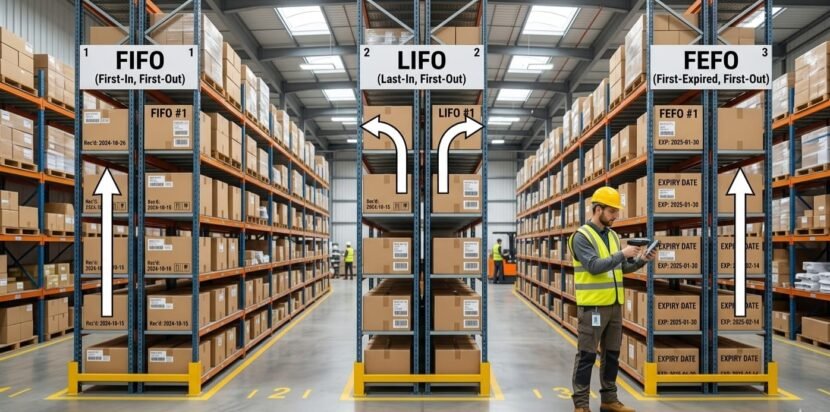
Different businesses use different inventory management methods depending on their industry and product type. Among the most commonly used inventory systems are FIFO (First In First Out), LIFO (Last In First Out), and FEFO (First Expired First Out). Understanding the differences between these systems helps businesses choose the right method to reduce losses, improve inventory accuracy, and maintain better operational control.
Understanding FIFO (First In First Out)
FIFO stands for “First In First Out,” which means that the inventory that enters the warehouse first should be used or sold first. In this method, older stock is always dispatched before newly received stock.
FIFO is widely used in industries where products have a limited shelf life or where stock aging can affect quality. Food processing, pharmaceuticals, FMCG, and chemical industries commonly use this method because it prevents stock from becoming outdated or expired.
Implementing FIFO also improves stock rotation and reduces the risk of dead inventory. Warehouses that follow FIFO typically arrange products in a way that ensures older stock is easily accessible. Proper labeling, clear rack positioning, and defined dispatch procedures are essential for maintaining FIFO discipline.
Understanding LIFO (Last In First Out)
LIFO stands for “Last In First Out,” which means the most recently received inventory is used or sold first. In this system, newer stock is dispatched before older stock.
This method is not suitable for industries dealing with perishable goods, but it may be used in certain industries where products do not expire or where pricing fluctuations influence inventory valuation.
For example, businesses dealing with construction materials, metals, or commodities sometimes apply LIFO for accounting or cost management purposes. However, from an operational perspective, LIFO can sometimes result in older stock remaining unused for long periods, which may lead to quality deterioration or obsolete inventory.
Because of these risks, LIFO is generally less preferred in industries where stock freshness and quality are critical.
Understanding FEFO (First Expired First Out)
FEFO stands for “First Expired First Out,” which means inventory with the earliest expiration date is used or dispatched first, regardless of when it arrived in the warehouse.
This method is especially important in industries where products have strict expiry dates. Pharmaceutical companies, food manufacturers, cosmetics businesses, and chemical industries commonly use FEFO systems to maintain compliance and product safety.
Unlike FIFO, FEFO focuses specifically on expiration dates rather than the order in which products enter the warehouse. Even if a product arrives later, it may be dispatched earlier if its expiration date is closer. Implementing FEFO requires accurate labeling, barcode tracking, and careful monitoring of expiry dates.
By following FEFO, businesses can significantly reduce the risk of expired inventory and regulatory issues.
Comparing FIFO, LIFO, and FEFO
Each inventory system serves a specific operational purpose, and selecting the right method depends on the type of products your business handles.
FIFO focuses on stock rotation and ensures older inventory moves out first. LIFO prioritizes recently purchased inventory and may be used for accounting or cost management in certain industries. FEFO, on the other hand, focuses strictly on product expiration dates and is essential for businesses dealing with perishable or regulated products.
For most small and medium businesses, FIFO remains the most practical and widely used system because it is simple to implement and reduces the risk of obsolete inventory. However, industries with strict expiry regulations must adopt FEFO to maintain product safety and compliance.
Choosing the Right Inventory System for Your Business
Selecting the correct inventory management method requires understanding your product characteristics, shelf life, and operational processes. Businesses dealing with food, medicines, or cosmetics should prioritize FEFO systems to ensure expired products are never dispatched.
Manufacturing companies and general trading businesses typically benefit from FIFO because it ensures smooth stock rotation and prevents old inventory from accumulating. Companies that operate in industries with fluctuating material costs may sometimes adopt LIFO for financial reporting, although it is less common in operational warehouse management.
The key is not just choosing the right method but also implementing proper warehouse discipline. Clear labeling, structured rack systems, defined stock movement procedures, and regular inventory audits are necessary to maintain any inventory system effectively.
Conclusion: Building an Efficient Inventory Control System
Inventory management systems like FIFO, LIFO, and FEFO are essential tools for improving warehouse efficiency and reducing financial losses. When businesses choose the right system and implement it consistently, they gain better control over stock movement, reduce wastage, and improve operational planning.
For small and growing businesses, implementing structured inventory systems can significantly improve productivity and profitability. A well-organized warehouse not only supports smooth operations but also helps businesses scale with confidence.
At Aarambh Business Consulting, we help SMEs design efficient warehouse systems, improve inventory control, and implement practical operational processes that increase profitability and reduce waste.
📞 Contact: 9689275533
🌐 www.aarambhconsulting.com
📧 help@aarambhconsulting.com