
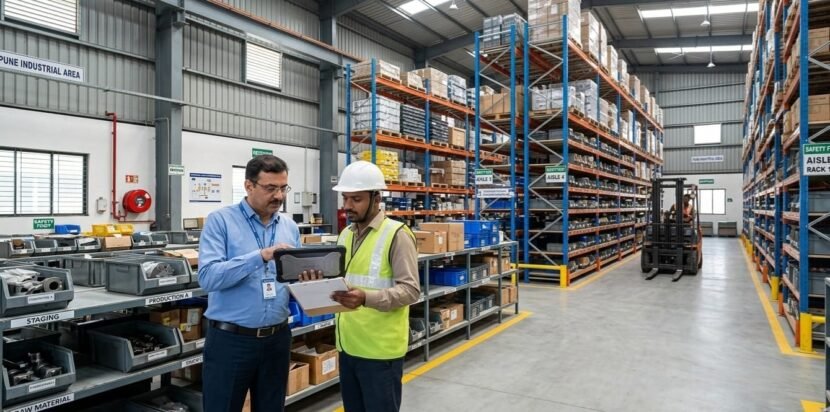
For many small and medium businesses, the warehouse is treated as a storage area rather than a strategic asset. However, in reality, a warehouse directly impacts cash flow, productivity, customer satisfaction, and overall profitability. If your warehouse is unorganized, inefficient, or poorly monitored, your business is silently losing money every single day.
Warehouse optimization is not about investing in expensive software or building a large infrastructure. It is about designing systems, controlling movement, improving accuracy, and reducing waste. When implemented properly, even a small warehouse can perform like a highly efficient operation center.
The first step in warehouse optimization is understanding material flow. Every warehouse should have clearly defined zones for raw material, work-in-progress (WIP), and finished goods. When materials move randomly without a structured path, unnecessary handling increases. This increases labor time, damages materials, and creates confusion during dispatch. By mapping the movement of material from inward to outward, businesses can reduce movement time significantly and improve operational clarity.
Another critical factor is layout planning. Many small businesses place materials wherever space is available. Over time, this creates congestion and difficulty in locating items. A structured layout ensures that fast-moving items are placed near dispatch areas, slow-moving items are stored strategically, and clear pathways are maintained for movement. Proper racking systems and labeling can increase space utilization by 20–30% without expanding the warehouse area.
Inventory accuracy is the backbone of warehouse efficiency. If your system stock does not match physical stock, planning becomes impossible. Production may stop due to stock shortages even when material is physically available but misplaced. On the other hand, over-purchasing due to incorrect records blocks working capital. Implementing cycle counting, barcode systems, or at least structured stock registers can dramatically improve accuracy. Businesses should aim for at least 95% inventory accuracy to maintain control.
Dead stock management is another major area often ignored by SMEs. When inventory remains unused for more than 90 or 180 days, it locks valuable capital. This directly affects cash flow and purchasing power. A monthly inventory aging analysis helps identify slow-moving and non-moving items. Once identified, management can decide whether to liquidate, reuse, or stop further purchasing of those items.
Warehouse performance measurement is equally important. What gets measured gets improved. Key performance indicators such as inventory accuracy percentage, order picking time, damage rate, and space utilization should be reviewed regularly. Even simple weekly review meetings can help identify issues before they become major losses.
Technology can support optimization, but systems come first. Many businesses invest in software without fixing processes. Even a basic Excel-based structured system can work effectively if roles and responsibilities are clearly defined. The store in-charge must have accountability, and stock transactions must follow defined approval processes.
Safety and cleanliness also play a significant role in optimization. Cluttered warehouses increase the risk of accidents and material damage. Implementing basic 5S practices—sorting, setting in order, shining, standardizing, and sustaining—can create a disciplined and efficient environment. Clean and organized warehouses not only improve productivity but also create a professional impression during audits and client visits.
For businesses in growing industrial areas like Pune and Maharashtra, warehouse optimization can become a competitive advantage. With increasing competition and tighter margins, operational efficiency is no longer optional—it is essential. Companies that focus on structured warehouse management often see improvements in cash flow, reduced losses, and faster order fulfillment.
In conclusion, warehouse optimization is not a one-time project but a continuous improvement process. Small changes in layout, tracking, accountability, and monitoring can create significant financial impact over time. If your warehouse is disorganized, facing stock mismatches, or struggling with dead inventory, it is a sign that structured intervention is required.
At Aarambh Business Consulting, we help SMEs identify operational gaps, redesign warehouse layouts, improve inventory accuracy, and implement practical control systems that increase profitability.
If you want to transform your warehouse into a profit center, connect with us today.
📞 9689275533
🌐 www.aarambhconsulting.com
📧 help@aarambhconsulting.com