
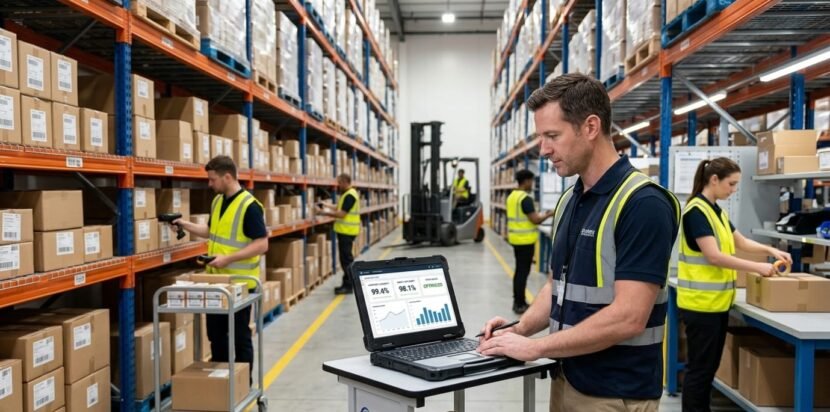
Introduction: Why Warehouse Performance Measurement Matters
In many small and medium-sized businesses, most attention is given to sales and production, while warehouse performance is often overlooked. However, the warehouse is a critical function that directly impacts cost control, inventory management, and timely customer delivery. Without proper measurement systems in place, it becomes difficult to identify inefficiencies, control losses, or improve overall operations.
This is where Key Performance Indicators (KPIs) play a vital role. Warehouse KPIs provide measurable insights into operational performance, helping businesses identify gaps and take corrective actions. When tracked consistently, these metrics can significantly improve efficiency, reduce operational costs, and ultimately increase profitability.
Inventory Accuracy: The Backbone of Warehouse Control
Inventory accuracy is one of the most fundamental KPIs in warehouse management. It measures how closely the recorded stock in your system matches the actual physical inventory. Poor accuracy can lead to frequent stock shortages, unnecessary purchases, and production disruptions.
To maintain smooth operations, businesses should aim for at least 95% to 97% accuracy. This can be achieved through regular cycle counting, proper documentation of stock movement, and strict adherence to standard operating procedures (SOPs).
Order Picking Accuracy: Delivering the Right Product
Order picking accuracy reflects how correctly items are selected and dispatched to customers. Even small errors in picking can lead to customer dissatisfaction, returns, and loss of trust.
Improving this KPI requires proper bin location systems, clear labeling, and disciplined practices like PEEP (Place for Everything and Everything in Place). The use of barcode systems and structured pick lists can further minimize errors and enhance customer satisfaction.
Inventory Turnover Ratio: Tracking Stock Efficiency
Inventory turnover ratio measures how quickly stock is sold or utilized within a given time period. A low turnover ratio indicates slow-moving or dead stock, which blocks working capital and reduces business agility.
By monitoring this KPI, businesses can optimize purchasing decisions, reduce excess inventory, and improve cash flow. A higher turnover ratio generally indicates efficient inventory management and better utilization of resources.
Order Fulfillment Time: Speed and Responsiveness
Order fulfillment time measures how quickly customer orders are processed and delivered. Delays in fulfillment can negatively impact customer experience and lead to lost business opportunities.
Improving warehouse layout, reducing unnecessary movement, and streamlining processes can significantly reduce fulfillment time. Faster delivery not only enhances customer satisfaction but also strengthens brand reliability.
Damage Rate: Minimizing Material Loss
Damage rate indicates the percentage of goods that are damaged during storage or handling. A high damage rate directly increases operational costs and reduces profitability.
To control this, businesses should focus on proper storage techniques, safe handling practices, and regular monitoring. Employee training and maintaining discipline within the warehouse environment are essential for reducing damage and improving efficiency.
Space Utilization: Using Warehouse Capacity Effectively
Space utilization measures how efficiently the available warehouse space is being used. Poor utilization can lead to congestion, inefficient movement, and increased operational costs.
By implementing proper racking systems, vertical storage solutions, and optimized layout planning, businesses can maximize storage capacity without expanding their warehouse. Efficient space usage improves workflow and enhances productivity.
Picking and Packing Productivity: Improving Labour Efficiency
This KPI evaluates how efficiently warehouse staff perform picking and packing operations. Low productivity leads to higher labour costs and slower order processing.
Setting clear performance targets, providing proper training, and optimizing workflow can significantly improve productivity. Even small improvements in labour efficiency can result in substantial cost savings over time.
Stock Aging Analysis: Controlling Dead Inventory
Stock aging analysis helps identify slow-moving and non-moving inventory. Inventory that remains unused for extended periods ties up capital and reduces financial flexibility.
Regular monitoring allows businesses to take timely actions such as liquidation, discounting, or stopping further purchases of slow-moving items. Managing stock aging effectively improves cash flow and reduces waste.
Return Rate: Measuring Customer Experience
Return rate measures how frequently products are returned by customers. A high return rate often indicates issues related to product quality, incorrect dispatch, or poor packaging.
By analyzing this KPI, businesses can identify root causes and implement corrective measures. Reducing return rates not only improves customer satisfaction but also lowers operational costs.
Conclusion: Turning Warehouse Data into Profit
Tracking warehouse KPIs is not just about collecting numbers—it is about making informed decisions that drive business improvement. When businesses consistently monitor these performance indicators, they gain better visibility into operational challenges and can take proactive steps to resolve them.
For SMEs, even tracking a few critical KPIs can create a significant impact on efficiency and profitability. A well-managed, data-driven warehouse becomes a strong foundation for sustainable business growth.
At Aarambh Business Consulting, we help businesses implement KPI-driven warehouse systems, improve operational efficiency, and increase profitability through structured and practical solutions.
📞 Contact: 9689275533
🌐 www.aarambhconsulting.com